Tennis on a phone
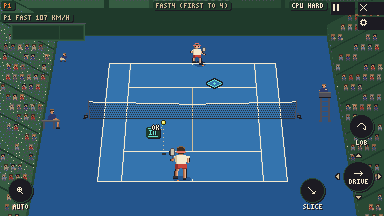
tennisBOP started as a keyboard game. Then I handed it to people on their phones, and it fell apart in about ten seconds. This post covers the week it took to put it back together.
Two thumbs
The left thumb gets a floating stick: put it down anywhere on the left half of the screen and drag to run. The right thumb gets three round buttons in an arc. DRIVE is the big one, nearest the corner, with SLICE to its left and LOB above. Tapping one is the shot. Holding it and dragging aims: left or right picks the side, up goes deep, down goes short. A ring of eight dots round the button shows which way you're aiming.
Switching your racket side was the awkward one. It meant lifting the moving thumb off the stick to reach a button. Now a quick tap on the left half flips your stance, and the thumb lands straight back on the stick. Auto stance is on by default for touch, and it flips for you as soon as the ball is on its way.
The bugs a phone finds
Phones found problems the keyboard never did. On an iPhone, dragging down from SLICE reached the bottom edge, and the swipe-up gesture threw you out of the game, so the buttons moved up and apart. Holding DRIVE sometimes never hit, because only the first touch counted as a press. A held shot now keeps trying until the ball arrives. Aiming used to walk you out of a ball you were set for, so now your feet plant once you're in position, and a held direction only aims.
The best one was a real simulation bug. Flipping stance while a shot was charging changed your stance but not the swing, so the racket met the ball on the side you had just left. On a phone you press early, so most flips happened mid-charge and did nothing. Fixing it helped keyboard players too.
A coach that stops the clock
The first tips were short prompts that appeared during play. Nobody could read them while chasing a ball. So the first match now freezes. When the first ball comes, the game stops, labels point at the landing diamond and the cross, and a hand shows where to drag. Play carries on the moment you move, in slow motion until your first hit. When the timing ring is big, it freezes again and a hand taps DRIVE, and your tap becomes the shot.
At the end of that first point, a card explains drive, slice and lob. Your first serve and your first aimed shot get the same freeze-frame treatment, and then the game gets out of the way.
Last of all, easy got easier. Against a simulated beginner, the novice now wins more than half the points. Easy is meant to be beaten on your first go.